Understanding Database Indexing
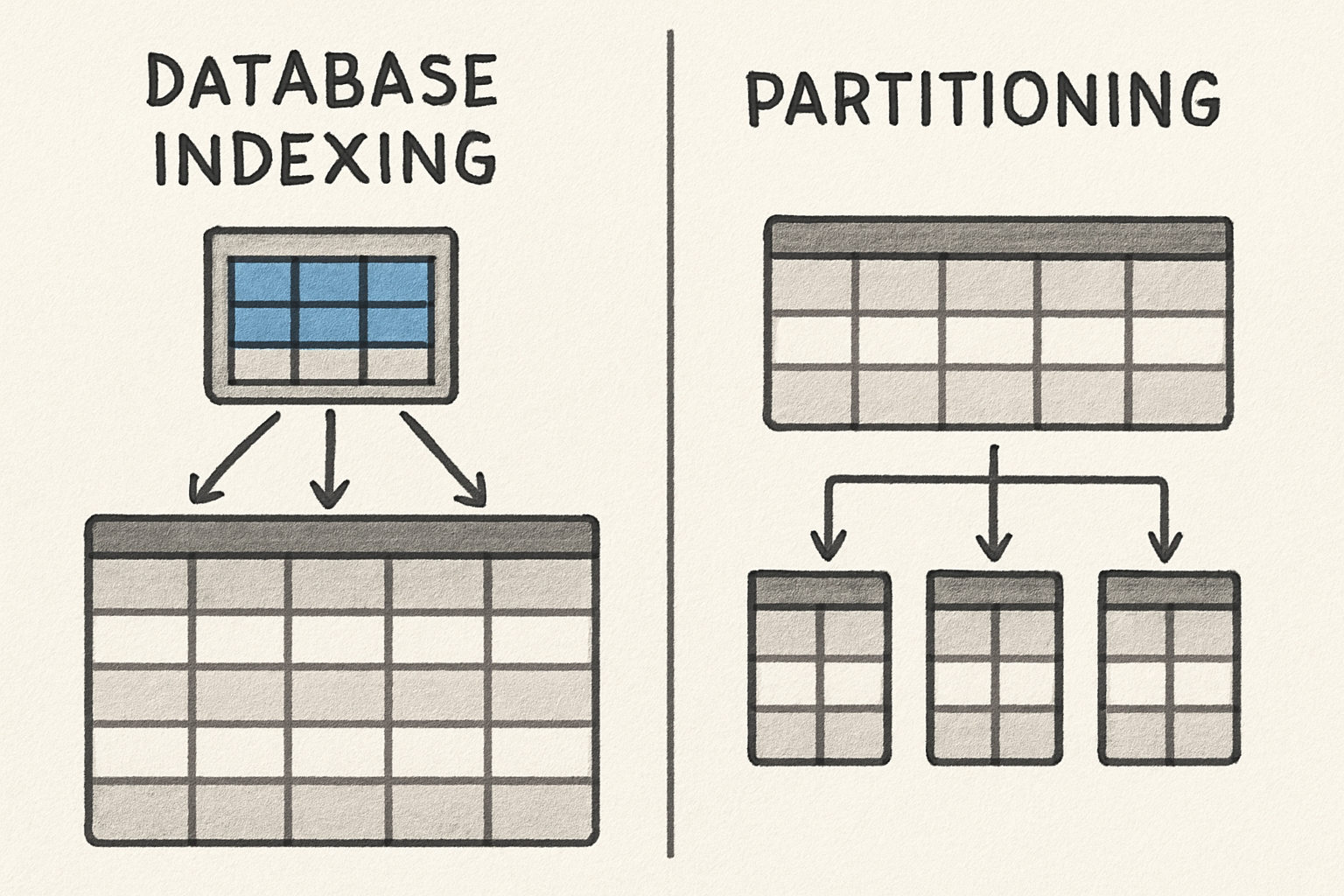
Database indexing is a technique used to optimize data retrieval by creating data structures called indexes. These indexes act as roadmaps that enable the database management system to quickly locate specific data within a large dataset. By organizing data in a structured manner, indexing reduces the need for the system to scan the entire database, resulting in improved query performance and response times.
The index structure consists of key-value pairs, where the key represents the column or combination of columns used for quick data access. The database system uses B-trees, hash tables, or other index structures to store and manage the indexed data efficiently.
Exploring Database Partitioning
Database partitioning is a technique that involves dividing large tables or indexes into smaller, more manageable subsets called partitions. Each partition contains a distinct range of data, allowing for efficient data storage, retrieval, and maintenance. Partitioning enables parallel processing, as different partitions can be processed simultaneously, leading to enhanced performance and scalability.
Partitioning can be done based on various criteria, such as range partitioning (based on a specific range of values), list partitioning (based on predefined lists), hash partitioning (based on hash values), or composite partitioning (a combination of multiple partitioning techniques).
Diving into the Differences
While both database indexing and partitioning improve database performance, they differ in their approach and purpose. Here are the key differences between the two techniques:
- Functionality: Database indexing focuses on improving query performance by creating indexes on specific columns, allowing for quick data retrieval. Partitioning, on the other hand, aims to enhance performance and scalability by dividing large tables or indexes into smaller partitions.
- Data Organization: Indexing organizes data within a single table or index using a data structure like a B-tree, enabling faster data access. Partitioning divides data into multiple subsets or partitions, each with its own distinct range, criteria, or hash value.
- Granularity: Indexing operates at a finer level, allowing the system to locate specific rows or data within a table or index. Partitioning operates at a coarser level, dividing tables or indexes into subsets based on predetermined criteria.
- Flexibility: Indexing provides flexibility in terms of creating indexes on columns that are frequently queried, enabling faster retrieval for specific data subsets. Partitioning offers flexibility by allowing data to be distributed across multiple storage devices or servers, enabling parallel processing and improved scalability.
Now that we have a basic understanding of database indexing and partitioning, let’s explore the benefits they offer individually.
Benefits of Database Indexing
Database indexing offers several advantages, making it an essential technique in optimizing data retrieval. Here are some key benefits:
- Enhanced Query Performance: Indexing enables the database system to locate and retrieve specific data rows or values efficiently, resulting in faster query execution. By reducing the need for full table scans, indexing significantly improves query response times.
- Improved Data Access: Indexing allows for direct access to data based on indexed columns, bypassing the need to scan the entire table. This leads to quicker data retrieval and reduces the system’s I/O (input/output) operations.
- Efficient Sorting and Filtering: Indexes facilitate efficient sorting and filtering of data, as they are organized in a structured manner. Sorting operations on indexed columns can be performed more quickly, resulting in improved data analysis and reporting capabilities.
- Optimized Join Operations: Indexes can greatly enhance the performance of join operations, especially when joining large tables. By creating indexes on join columns, the system can quickly identify matching rows, reducing the overall execution time of complex queries.
To make the most of database indexing, certain key considerations should be kept in mind.
Key Considerations for Indexing
While indexing offers significant benefits, it requires careful planning and implementation to maximize its effectiveness. Here are some key considerations for successful database indexing:
- Column Selection: Carefully analyze the queries executed against the database and identify the frequently accessed columns. Create indexes on these columns to optimize query performance. Avoid excessive indexing, as it can introduce overhead during data modifications.
- Index Maintenance: Regularly monitor and maintain indexes to ensure optimal performance. This includes rebuilding or reorganizing indexes, updating statistics, and removing unused or redundant indexes. Maintenance tasks should be scheduled during periods of low database activity to minimize any impact on system performance.
- Index Cardinality: Consider the cardinality of indexed columns, which refers to the uniqueness of data values. Columns with high cardinality (containing a large number of unique values) are more suitable for indexing, as they provide better selectivity and query performance.
- Data Modification Impact: Keep in mind that indexes incur overhead during data modification operations such as inserts, updates, and deletes. The system needs to maintain and update the index structures whenever data changes occur. Assess the balance between query performance and data modification overhead when deciding on index creation.
By considering these factors and tailoring the indexing strategy to the specific database requirements, organizations can reap the maximum benefits of efficient data retrieval.
Advantages of Database Partitioning
Database partitioning offers a range of advantages that contribute to improved performance, scalability, and data management. Let’s explore the key benefits of partitioning:
- Enhanced Query Performance: Partitioning allows for parallel processing by dividing data into smaller subsets. This enables concurrent execution of queries on different partitions, leading to improved query performance and reduced response times.
- Scalability: Partitioning enables horizontal scalability by distributing data across multiple storage devices or servers. As the data grows, new partitions can be added, ensuring the system can handle increased workloads and maintain performance.
- Efficient Data Management: Partitioning simplifies data management by dividing large tables or indexes into smaller, more manageable partitions. This improves data organization, making it easier to perform maintenance tasks such as backup and recovery, data archiving, and table reorganization.
- Cost Savings: By distributing data across multiple storage devices, partitioning allows organizations to leverage cost-effective storage options. Frequently accessed partitions can be stored on high-performance storage, while less frequently accessed partitions can be stored on cheaper storage mediums.
To make the most of database partitioning, it is essential to follow best practices and consider various factors during implementation.
Best Practices for Partitioning
Successful implementation of database partitioning relies on following best practices and considering important factors. Here are some key guidelines for effective partitioning:
- Data Distribution Strategy: Choose an appropriate partitioning strategy based on the specific requirements of the database and application. Consider factors such as data distribution, query patterns, and scalability needs. Range partitioning, list partitioning, and hash partitioning offer different advantages based on the data characteristics and usage patterns.
- Partition Key Selection: Select an optimal partition key that evenly distributes data across partitions and aligns with the queries executed against the database. The partition key should avoid hotspots and ensure a balanced workload across partitions.
- Partition Maintenance: Regularly monitor and maintain partitions to optimize performance. This includes monitoring partition sizes, redistributing data if necessary, and updating partitioning schemes as data characteristics change over time.
- Backup and Recovery: Implement a robust backup and recovery strategy that takes into account the partitioned nature of the database. Ensure that all partitions are backed up regularly and that the recovery process is tested to guarantee data integrity and availability.
By adhering to these best practices, organizations can harness the power of database partitioning to achieve improved performance and scalability.
Database Indexing vs Partitioning: A Comparative Analysis
Now that we have explored the individual benefits and considerations of database indexing and partitioning, let’s compare the two techniques to understand their relative strengths and use cases.
| Aspect | Database Indexing | Database Partitioning |
|---|---|---|
| Functionality | Optimizes data retrieval and query performance | Enhances performance and scalability by dividing data |
| Data Organization | Organizes data within a table or index | Divides tables or indexes into partitions |
| Granularity | Operates at a finer level | Operates at a coarser level |
| Flexibility | Provides flexibility in indexing specific columns | Enables distribution of data across multiple devices |
| Use Cases | Suitable for optimizing query performance and specific data retrieval | Suitable for improving scalability and parallel processing |
It is important to note that indexing and partitioning are not mutually exclusive techniques. In fact, they can complement each other to achieve optimal database performance.
Common Use Cases for Indexing
Database indexing is particularly useful in the following scenarios:
- Search Operations: Indexing greatly improves search operations on specific columns. It enables quick retrieval of data based on search conditions, making it ideal for applications that require efficient searching.
- Sorting and Grouping: Indexing enhances sorting and grouping operations, allowing for faster analysis and reporting. By creating indexes on columns used for sorting or grouping, organizations can optimize data manipulation tasks.
- Join Operations: Indexing improves the performance of join operations, especially when joining large tables. By creating indexes on join columns, the database system can efficiently identify matching rows, reducing the overall execution time of complex queries.
When considering indexing, it is important to evaluate the specific requirements and usage patterns of the database to determine the columns that would benefit the most from indexing.
When to Opt for Database Partitioning
Database partitioning is particularly beneficial in the following scenarios:
- Large Datasets: Partitioning is highly advantageous when dealing with large datasets that exceed the available memory or storage capacity. By dividing the data into smaller partitions, organizations can efficiently manage and process large volumes of information.
- Parallel Processing: Partitioning enables parallel processing by dividing data into smaller subsets. This makes it an ideal choice for systems that require high-performance processing of large volumes of data.
- Scalability and Performance: Partitioning enhances scalability by distributing data across multiple storage devices or servers. It allows organizations to handle increased workloads and maintain performance as data grows.
- Data Lifecycle Management: Partitioning simplifies data lifecycle management by allowing organizations to archive or delete old data more efficiently. This helps optimize storage resources and improves overall system performance.
When implementing partitioning, it is crucial to carefully consider the specific characteristics of the data and the requirements of the application to determine the most suitable partitioning strategy.
How Indexing Improves Query Performance
Indexing plays a crucial role in improving query performance by enabling the database management system to locate and retrieve data more efficiently. Here’s how indexing achieves this:
- Reduced Data Scanning: By creating indexes on specific columns, the database system can quickly locate data without scanning the entire table or index. This dramatically reduces the I/O operations required for data retrieval, resulting in faster query execution.
- Improved Selectivity: Indexing improves selectivity by providing a focused and efficient access path to specific data subsets. Queries that leverage indexed columns can quickly narrow down the search space, reducing the amount of data the system needs to process.
- Avoiding Costly Joins: Indexes on join columns facilitate efficient join operations by eliminating the need for full table scans. The system can leverage the indexes to identify matching rows, reducing the time and resources required for complex join queries.
- Query Plan Optimization: The presence of indexes allows the database optimizer to choose the most efficient query execution plan. The optimizer can utilize index statistics to estimate the cost of different query plans and select the one with the lowest cost, resulting in improved performance.
Indexing, when applied strategically to the right columns, can significantly enhance the overall performance of a database system by minimizing data retrieval time and optimizing query execution.
Partitioning Strategies for Efficient Data Management
Database partitioning offers various strategies for efficient data management. The choice of partitioning strategy depends on the characteristics of the data and the specific requirements of the database. Here are some commonly used partitioning strategies:
- Range Partitioning: This strategy involves dividing data based on a specified range of values. For example, a sales database could be partitioned based on the sales date, with each partition containing data for a specific date range. Range partitioning is useful when there is a natural order or range criterion for the data.
- List Partitioning: List partitioning involves dividing data based on predefined lists of values. Each partition contains data that matches the values specified in the list. This strategy is useful when there are distinct categories or groups for the data.
- Hash Partitioning: Hash partitioning involves distributing data across partitions based on the hash value of a specified column. The hash function ensures an even distribution of data across partitions. Hash partitioning is beneficial when there is no natural ordering or range criterion for the data.
- Composite Partitioning: Composite partitioning involves combining multiple partitioning strategies to achieve more flexibility and efficiency. For example, a database could be range-partitioned based on sales date and then further hash-partitioned within each range. Composite partitioning allows organizations to tailor the partitioning strategy to the specific characteristics of the data.
Choosing the appropriate partitioning strategy requires careful analysis of the data distribution, query patterns, and scalability requirements. It is important to strike a balance between efficient data management and optimized query performance.
Indexing Techniques for Enhanced Search
To enhance search capabilities and improve query performance, several indexing techniques can be employed. Let’s explore some commonly used indexing techniques:
- B-Tree Indexing: B-tree indexing is widely used in database systems to support efficient search operations. B-trees are balanced tree structures that provide logarithmic time complexity for searching, inserting, and deleting data. B-tree indexing is effective for range queries and supports both equality and inequality searches.
- Bitmap Indexing: Bitmap indexing is particularly useful for low-cardinality columns where data values are limited. It uses bitmaps to represent the presence or absence of data values in a column. Bitmap indexes are highly compressed and efficient for equality and set-based operations.
- Full-Text Indexing: Full-text indexing is designed for efficient text-based search operations. It allows users to search for specific words or phrases within large blocks of text, such as documents or web pages. Full-text indexing techniques include inverted indexes, n-gram indexes, and specialized algorithms for relevance ranking.
- Spatial Indexing: Spatial indexing is employed for efficient searching and retrieval of spatial data, such as points, lines, or polygons. Techniques like R-trees and quad-trees are commonly used to organize and index spatial data, enabling proximity searches and spatial analysis.
Choosing the appropriate indexing technique depends on the nature of the data and the specific search requirements. Database administrators and developers must carefully assess the characteristics of the data and select the most suitable indexing technique to achieve optimal search performance.
Partitioning: A Solution for Scalability
Scalability is a critical factor in modern data management systems, as organizations deal with ever-increasing volumes of data. Database partitioning offers a powerful solution to address scalability challenges. Here’s how partitioning enables scalability:
- Distribution of Data: By partitioning data across multiple storage devices or servers, organizations can distribute the workload and leverage parallel processing. Each partition can be assigned to a different device or server, allowing for concurrent execution of queries and efficient resource utilization.
- Ease of Data Management: Partitioning simplifies data management by dividing large tables or indexes into smaller, more manageable subsets. This enables organizations to perform maintenance tasks such as backup, recovery, and data archiving more efficiently. It also reduces the impact of these tasks on system performance.
- Support for Sharding: Sharding is a technique closely related to partitioning, where data is distributed across multiple database instances or clusters. By leveraging sharding, organizations can horizontally scale their databases by adding more servers or nodes to accommodate increased workloads.
- Improved Query Performance: Partitioning allows for parallel query execution on different partitions, resulting in improved query performance and reduced response times. Queries can be executed simultaneously on multiple partitions, leading to faster data retrieval and analysis.
Partitioning is particularly beneficial in scenarios where data grows rapidly, and the workload exceeds the capacity of a single server or storage device. By leveraging partitioning, organizations can achieve scalable and high-performance data management systems.
Maximizing Performance with Combined Approaches
While database indexing and partitioning are powerful techniques on their own, combining them can unlock even greater performance and efficiency benefits. Here are some ways to maximize performance by combining indexing and partitioning:
- Indexed Partitioning: By creating indexes on partitioned tables or indexes, organizations can further enhance query performance. Each partition can have its own set of indexes tailored to the specific data subset it contains. This allows for more targeted and efficient data retrieval.
- Partition-Wise Join with Indexing: When performing join operations on partitioned tables, utilizing indexes on the join columns can significantly improve performance. The database optimizer can leverage both the partitioning strategy and the indexes to execute join operations efficiently, reducing overall execution time.
- Index-Organized Tables (IOT): In some cases, it may be beneficial to combine indexing and partitioning through the use of index-organized tables. IOTs store both the data rows and the associated index in a single structure. This can result in improved query performance, especially for tables with a narrow range of key values.
Organizations should carefully assess their specific requirements and workload characteristics to determine the most effective combination of indexing and partitioning techniques. By leveraging the strengths of both approaches, they can achieve optimal database performance and scalability.
Addressing Common Misconceptions
Database indexing and partitioning are powerful techniques for optimizing data management, but there are some common misconceptions that need to be addressed. Let’s debunk a few of these misconceptions:
- Indexing Solves All Performance Issues: While indexing can significantly improve query performance, it is not a cure-all solution. Poorly designed indexes or excessive indexing can introduce overhead and degrade performance. Careful analysis and planning are necessary to create effective indexes that align with query patterns.
- Partitioning Solves Scalability Issues: While partitioning enables scalability, it is not a silver bullet for all scalability challenges. In some cases, other techniques like sharding or database clustering may be more suitable for achieving high scalability.
- Partitioning Eliminates the Need for Indexing: Partitioning and indexing are complementary techniques. Partitioning enhances data management and parallel processing, while indexing improves query performance and data retrieval. Both techniques can be used together to achieve optimal performance and scalability.
- Indexing and Partitioning Have No Overhead: Both indexing and partitioning introduce some overhead to the database system. Indexes need to be maintained, and partitioned tables require additional management. Organizations need to carefully evaluate the trade-offs and consider the impact on performance and maintenance tasks.
By understanding these misconceptions and addressing them, organizations can make informed decisions when implementing indexing and partitioning strategies.
Frequently Asked Questions
What is database indexing?
Database indexing is a technique used to optimize data retrieval by creating data structures called indexes. Indexes act as roadmaps that enable the database management system to quickly locate specific data within a large dataset. By organizing data in a structured manner, indexing reduces the need for the system to scan the entire database, resulting in improved query performance and response times.
How does database partitioning work?
Database partitioning involves dividing large tables or indexes into smaller, more manageable subsets called partitions. Each partition contains a distinct range of data, allowing for efficient data storage, retrieval, and maintenance. Partitioning enables parallel processing, as different partitions can be processed simultaneously, leading to enhanced performance and scalability.
Can indexing and partitioning be used together?
Yes, indexing and partitioning can be used together to achieve optimal performance and scalability. Indexes can be created on partitioned tables or indexes, allowing for more targeted and efficient data retrieval. By combining the strengths of both techniques, organizations can enhance query performance and data management.
Is indexing suitable for small databases?
Indexing can be beneficial for small databases as well. While the performance gains may not be as significant as in large databases, indexing can still improve query response times and data retrieval efficiency. Organizations should carefully assess the specific requirements and usage patterns of their small databases to determine the optimal indexing strategy.
Does partitioning improve data retrieval speed?
Yes, partitioning can improve data retrieval speed by enabling parallel processing. With data divided into smaller partitions, the system can execute queries concurrently on different partitions, reducing overall response times. Partitioning enhances performance and scalability, especially for large databases or datasets.
Are there any performance trade-offs with partitioning?
While partitioning offers performance and scalability benefits, there can be some trade-offs to consider. Partitioning introduces additional management overhead, and the system needs to maintain and manage partitions effectively. Queries that involve data across multiple partitions may experience increased overhead due to data coordination. It is essential to carefully plan and implement partitioning strategies to minimize these trade-offs and maximize performance.
Conclusion
Database indexing and partitioning are powerful techniques that enable organizations to optimize data retrieval, enhance query performance, and achieve scalability. Indexing focuses on creating data structures that enable quick data access, while partitioning divides data into smaller subsets for efficient storage and parallel processing.
By leveraging indexing and partitioning together or individually, organizations can unlock the power of data management and create high-performance database systems. However, careful analysis, planning, and consideration of specific requirements are crucial for successful implementation.
So, whether you choose to employ indexing, partitioning, or a combination of both, harnessing these techniques will undoubtedly empower your data management endeavors.