Tag: CDO

  • The Chief Data Officer’s Guide to Data Governance in 2026

    The Chief Data Officer’s Guide to Data Governance in 2026

    A Chief Data Officer (CDO) is the executive responsible for enterprise-wide data strategy, data governance, data quality, and extracting business value from organizational data assets. The CDO role emerged in the 2010s as organizations recognized that data had become a strategic asset requiring C-level ownership — not just an IT concern but a business imperative driving revenue, efficiency, and competitive advantage.

    In 2026, the CDO role has matured significantly. What began as a niche position in financial services and technology companies has expanded across industries. Healthcare systems, manufacturing firms, government agencies, retail chains, and professional services organizations all now recognize that effective data leadership requires dedicated executive focus.

    This comprehensive guide is written specifically for Chief Data Officers — whether you’re newly appointed to the role, considering a CDO position, or a CEO evaluating whether your organization needs a CDO. You’ll learn what the modern CDO role entails, how to build an effective data governance program from the ground up, how to demonstrate ROI to skeptical executives, what organizational models work in different contexts, how to avoid common CDO failure modes, and how AI is fundamentally reshaping the CDO’s mandate.

    This isn’t theoretical guidance from consultants — it’s practical wisdom from real-world CDO experience in regulated industries, large enterprises, and complex organizational environments.

    Show Table of Contents
    Hide Table of Contents

    The Modern CDO Role: Authority and Responsibility

    The Chief Data Officer role varies significantly across organizations, but successful CDOs share common responsibilities and require specific organizational authority to be effective.

    What CDOs Actually Do

    At the highest level, the CDO is accountable for treating data as a strategic enterprise asset. This translates into several concrete responsibilities.

    Data governance and policy. The CDO establishes and enforces enterprise data policies covering data quality standards, data access and security, data retention and disposal, data privacy and compliance, and data ownership and stewardship. The CDO doesn’t personally govern every dataset — that would be impossible — but establishes the governance framework that data stewards execute within their domains.

    Data strategy and roadmap. The CDO defines where the organization should invest in data capabilities: which data platforms to adopt, what data products to build, how to modernize legacy data infrastructure, and how to prioritize competing data initiatives. The CDO translates business strategy into data strategy and ensures data investments align with business objectives.

    Data quality and trust. The CDO is ultimately accountable for ensuring that business decisions are made on trusted data. This requires establishing data quality measurement, implementing data quality improvement processes, providing transparency into data quality issues, and building confidence in enterprise data among business users.

    Analytics enablement and democratization. The CDO enables self-service analytics by providing data discovery tools (data catalogs), governed data access, training and enablement for business users, and analytics infrastructure. The goal is moving from “data as IT’s problem” to “data as everyone’s opportunity.”

    Regulatory compliance. The CDO ensures the organization meets data-related regulatory requirements: GDPR, CCPA, HIPAA, SOX, industry-specific regulations, and emerging AI ethics requirements. The CDO translates regulatory language into technical controls and operational processes.

    Data monetization and innovation. Forward-thinking CDOs explore how data can create new revenue streams: data products sold to partners or customers, AI and machine learning capabilities, and operational efficiencies through advanced analytics. This is where the CDO becomes a business value driver rather than just a governance gatekeeper.

    The Authority CDOs Need

    To execute these responsibilities, CDOs require specific organizational authority. CDOs without this authority become advisors rather than leaders — unable to enforce decisions when business units resist.

    Policy authority. The ability to establish enterprise data policies that business units must follow. Without this, governance is voluntary and therefore ignored.

    Budget control. Direct budget authority for data governance tools, data platforms, and the data governance team. Reporting to another executive who controls budget fundamentally undermines CDO effectiveness.

    Cross-functional authority. The ability to convene and direct work from IT, legal, compliance, security, and business units on data initiatives. A CDO who can only advise but not direct cannot drive organizational change.

    Data stewardship appointment. The authority to assign data stewardship responsibilities to individuals across the organization and hold them accountable. Data governance fails when stewardship is voluntary.

    Veto power on data decisions. In critical scenarios — such as a business unit wanting to deploy a system that would violate privacy regulations — the CDO needs the authority to block the initiative. This should be used sparingly but must exist.

    Organizations that appoint CDOs without granting this authority set them up for failure. The CDO becomes a figurehead who documents problems without ability to fix them.


    Why Organizations Need a Chief Data Officer

    Not every organization needs a CDO. Small companies with simple data environments often don’t justify dedicated C-level data leadership. But specific organizational contexts create clear need for a CDO.

    Regulatory Pressure

    Organizations in heavily regulated industries — financial services, healthcare, telecommunications, energy — face such complex and evolving data regulations that compliance requires dedicated executive focus. A bank facing Basel III risk data aggregation requirements, BCBS 239 data governance principles, GDPR privacy requirements, CCPA in California, and SEC/FINRA recordkeeping rules cannot reasonably expect a part-time data governance manager to maintain compliance.

    The CDO in regulated industries serves as the single point of accountability for demonstrating to regulators that the organization has appropriate data controls. When auditors ask “who is responsible for ensuring this data is accurate?”, the answer is the CDO. This executive accountability is what regulators increasingly expect.

    Data at Scale

    Organizations with massive data volumes across dozens or hundreds of systems reach a complexity threshold where governance cannot be federated to individual system owners. A healthcare system with electronic health records, billing systems, research databases, genomics data, IoT medical devices, and insurance claims data cannot effectively govern that ecosystem without centralized leadership defining common standards and ensuring interoperability.

    The CDO provides the coordinating function that prevents data silos, redundant data collection, and incompatible data definitions across this complex ecosystem. Without a CDO, each system team optimizes locally while the enterprise suffers from data fragmentation.

    Digital Transformation Initiatives

    Organizations undergoing major digital transformation — migrating to cloud, implementing AI and machine learning, launching data-driven products — need a CDO to ensure transformation delivers business value rather than just modern technology. Digital transformations fail most often not from technology problems but from data problems: poor data quality preventing AI adoption, siloed data blocking integrated customer experiences, and lack of governance creating security incidents.

    The CDO serves as the transformation architect ensuring that data strategy aligns with business transformation goals, data quality improves alongside technology modernization, governance scales to new technology paradigms, and transformation delivers measurable business outcomes.

    Data Monetization Opportunities

    Organizations recognizing opportunities to monetize data — through data products, AI-powered services, or data sharing partnerships — need executive-level business leadership for those initiatives. A media company recognizing it can sell audience data to advertisers, a manufacturer realizing equipment telemetry data is valuable to insurance companies, or a retailer understanding that shopping pattern data enables new services all need a CDO to explore these opportunities systematically.

    The CDO in this context functions as a business development executive focused specifically on data-enabled revenue streams. This requires both technical data expertise and commercial business acumen — a combination rarely found outside dedicated CDO roles.

    Organizational Signals You Need a CDO

    Specific organizational symptoms indicate CDO need:

    Business decisions are delayed because nobody can definitively answer “what’s the right number?” Different departments report conflicting metrics and nobody can reconcile them. Data access requests take weeks because no clear approval process exists. Multiple business units are independently building the same data capabilities, wasting resources on redundant efforts. Regulatory compliance audits repeatedly identify data governance gaps. IT is overwhelmed with data requests and cannot prioritize strategically. The organization launched a data lake or data warehouse but adoption is minimal because nobody governs what goes in it.

    These symptoms all point to lack of enterprise data leadership — the gap a CDO fills.


    CDO vs. CIO vs. CTO: Understanding the Distinctions

    Organizations often struggle to differentiate CDO, CIO (Chief Information Officer), and CTO (Chief Technology Officer) roles. Understanding the distinctions clarifies where the CDO adds unique value.

    The CIO Focus: Technology Operations

    The CIO traditionally owns IT infrastructure, enterprise applications, and technology operations. The CIO ensures systems run reliably, technology investments align with business needs, cybersecurity protects the organization, and IT service delivery meets business requirements.

    The CIO’s mandate is primarily operational: keep systems running, deliver projects on time and budget, and maintain security. When the CIO thinks about data, it’s through an operational lens — ensuring databases are backed up, storage capacity is adequate, and data integrations don’t break.

    The CTO Focus: Technology Innovation

    The CTO owns the organization’s technology vision and innovation agenda. The CTO evaluates emerging technologies, defines technical architecture standards, leads R&D initiatives, and ensures the organization adopts technology that creates competitive advantage.

    The CTO’s mandate is strategic and forward-looking: where should technology investments go to enable future business models? When the CTO thinks about data, it’s through an innovation lens — how can machine learning create new capabilities? Should we adopt a data mesh architecture? What’s our AI strategy?

    The CDO Focus: Data as Asset

    The CDO treats data itself — not the technology that stores or processes it — as the strategic asset requiring governance, quality control, and business leverage. The CDO ensures data is trusted, accessible, compliant, and value-generating.

    The distinction is subtle but critical. The CIO ensures the data warehouse runs efficiently. The CTO evaluates whether the organization should adopt a modern data lakehouse architecture. The CDO ensures that regardless of underlying technology, the data within those systems is accurate, well-documented, appropriately accessed, and actually used to drive business decisions.

    Organizational Models and Reporting Structures

    Different organizations structure these relationships differently:

    CDO reporting to CEO. This model, most common in data-intensive organizations (financial services, technology companies, digital-first retailers), grants the CDO peer status with CIO and CTO. The CDO has independent authority and budget. This maximizes CDO effectiveness but requires careful coordination between the three roles.

    CDO reporting to CIO. Common in traditional enterprises where IT owns all technology and data initiatives. This can work if the CIO empowers the CDO with meaningful authority, but risks the CDO becoming just a senior data architect without policy authority. The danger is the CDO becomes focused on IT-centric data management rather than business-centric data governance.

    CDO and CTO reporting to CIO. Some organizations position the CIO as the umbrella technology leader with CDO and CTO as specialized deputies — the CTO for innovation, the CDO for data strategy. This can work in organizations where the CIO has broad strategic mandate beyond operational IT.

    Combined CDO/CIO or CDO/CTO. Smaller organizations sometimes combine roles, appointing a CDO/CIO or CDO/CTO. This works when the organization’s primary competitive advantage is data (justifying the emphasis on CDO responsibilities even within a combined role) but struggles when operational IT or innovation demands compete for attention.

    The key success factor isn’t the org chart but the clarity of accountability. Regardless of reporting structure, someone must be unambiguously accountable for data quality, governance, and business value. That person is the CDO, by whatever title.


    The CDO’s Core Mandate: Building Data Governance

    For most CDOs, especially in the first 12-24 months, the core mandate is establishing enterprise data governance. Everything else — analytics enablement, data monetization, AI strategy — depends on governance foundations.

    What Data Governance Actually Means

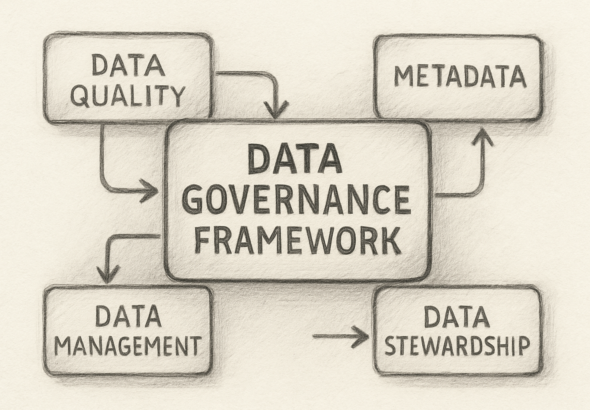
    Data governance is the framework of policies, processes, roles, and technologies that ensures data is accurate, secure, accessible, and compliant. It answers fundamental questions: who decides what data means (business definitions), who can access which data (access control), how do we ensure data is correct (quality management), how do we demonstrate compliance (audit and reporting), and who is accountable for each data domain (ownership and stewardship).

    Data governance isn’t a one-time project — it’s an ongoing operating model requiring sustained investment. The CDO’s job is building that operating model and embedding it into how the organization works.

    The Business Case for Data Governance

    Governance skeptics — often business unit leaders who see governance as bureaucracy — need compelling business justification. The CDO must articulate governance ROI in business terms.

    Risk mitigation. Poor data governance creates regulatory fines (GDPR violations can reach 4% of global revenue), security breaches (unauthorized data access), and operational failures (decisions made on wrong data). Governance prevents these costly failures.

    Efficiency gains. Organizations with poor governance waste enormous analyst and data engineer time simply finding data, reconciling conflicting data definitions, and fixing data quality issues. The often-cited statistic is that data professionals spend 30-40% of time on data discovery and quality problems rather than value-generating analysis. Governance reduces this waste.

    Revenue enablement. Self-service analytics, AI/ML capabilities, and data-driven decision making all require trusted, well-governed data. Governance isn’t a cost center — it’s the enabling investment that makes data-driven revenue generation possible.

    Strategic agility. Acquisitions, divestitures, and business model changes all require understanding and integrating data estates. Organizations with strong governance can execute these strategic moves faster because they understand their data.

    The CDO who frames governance as “compliance obligation” gets minimal budget and grudging cooperation. The CDO who frames governance as “strategic enabler for analytics, AI, and business agility” gets meaningful investment.


    Establishing Your Data Governance Framework

    The CDO’s first major initiative is typically establishing the organization’s data governance framework — the policies, standards, and principles that define how data should be governed.

    The DAMA-DMBOK Foundation

    Many CDOs start with the DAMA-DMBOK (Data Management Body of Knowledge) framework as a foundation. DMBOK defines 11 knowledge areas including data governance, data architecture, data modeling, data storage and operations, data security, data integration, data quality, master data management, and business intelligence and analytics.

    The framework provides vocabulary and structure but shouldn’t be implemented wholesale. The CDO’s job is selecting which knowledge areas are priorities given organizational context and maturity.

    Your Data Governance Charter

    The data governance charter is the foundational document defining governance scope, authority, and principles. An effective charter includes:

    Governance objectives stating what governance will accomplish (ensure data accuracy and consistency, enable compliant data access, build trust in enterprise data, enable self-service analytics).

    Governance principles defining guiding beliefs such as “data is an enterprise asset, not owned by individual departments”, “data access should be self-service within governance guardrails”, “data quality is measured and improved continuously”, and “governance should enable rather than block business objectives”.

    Governance scope specifying what data is governed (all enterprise data? specific critical data domains?) and what isn’t (personal productivity data? external data sources not under organizational control?).

    Decision rights clarifying who makes what decisions (the CDO sets governance policy, data stewards make domain-specific decisions within policy, business data owners decide access within compliance boundaries, and governance councils resolve cross-domain conflicts).

    Enforcement mechanisms explaining how governance is enforced (policy violations are escalated to data governance council, repeated violations impact performance reviews, systems that circumvent governance are decommissioned).

    The charter should be approved by the CEO or executive leadership team and published enterprise-wide. This ensures everyone understands governance has executive backing and isn’t optional.

    Data Classification and Sensitivity Levels

    One of the first practical governance policies the CDO establishes is data classification — how the organization categorizes data by sensitivity and required protection level.

    A common four-level classification scheme:

    Public data can be shared externally without restriction (marketing materials, published financial reports, public web content).

    Internal data is for internal use only but isn’t sensitive (internal presentations, planning documents, non-sensitive business metrics).

    Confidential data requires protection due to business sensitivity or regulatory requirements (customer PII, employee records, financial details, intellectual property, unpublished strategic plans).

    Restricted data is extremely sensitive requiring maximum protection (payment card data, health records, highly classified intellectual property, executive compensation details).

    Each classification level has associated handling requirements: encryption requirements, access control requirements, retention and disposal requirements, and incident response requirements.

    Data classification feeds into almost every other governance process — access decisions, security controls, compliance documentation — so establishing it early is essential.

    Data Ownership and Stewardship Model

    Data governance fails without clear accountability. The CDO establishes who owns data and who stewards it.

    Data owners are business leaders accountable for data quality and appropriate use within their domain. The VP of Sales owns customer data. The CFO owns financial data. Data owners make decisions about who should have access, define business rules for their data, and are held accountable when data quality problems arise.

    Data stewards are subject matter experts designated by data owners to operationally manage data quality, enrichment, and governance activities. Data stewards review and approve data definitions, triage data quality issues, enrich metadata in data catalogs, and serve as the escalation point for data access questions.

    The CDO doesn’t personally own or steward all data — that wouldn’t scale. The CDO establishes the ownership and stewardship model and holds owners and stewards accountable to governance standards.


    Building the Data Governance Operating Model

    A framework is necessary but insufficient. The CDO must build the operating model — the ongoing processes and organizational structures that make governance real.

    The Data Governance Council

    Most CDOs establish a data governance council as the primary governance body. The council typically includes the CDO (chair), senior business leaders representing major data domains (Sales, Finance, Operations, HR), the CIO or delegate, the Chief Security Officer or Chief Risk Officer, legal/compliance representation, and rotating members from key initiatives.

    The council meets monthly or quarterly and serves several functions. It approves governance policies and standards, resolves cross-domain data conflicts, prioritizes data governance investments, reviews governance KPIs and addresses underperformance, and approves exceptions to governance policies.

    The council provides the CDO with business leader buy-in and ensures governance decisions reflect business needs rather than just IT or compliance concerns.

    Data Stewardship Committees by Domain

    Large organizations often implement domain-specific data stewardship committees reporting to the governance council. The Customer Data Stewardship Committee includes representatives from Sales, Marketing, Customer Service, and IT. The Financial Data Stewardship Committee includes Finance, Accounting, FP&A, and IT. Each committee handles domain-specific governance issues without escalating everything to the enterprise council.

    This federated governance model balances central control (enterprise standards from the governance council) with local autonomy (domain committees can make domain-specific decisions).

    Integrating Governance into Existing Processes

    Governance succeeds when it’s embedded into existing business and IT processes rather than being a separate bureaucratic overlay.

    The CDO integrates governance into system development by requiring all new data systems to document data ownership, data classification, and data lineage before production deployment. Data quality standards must be defined in project requirements. Governance sign-off becomes a deployment gate.

    The CDO integrates governance into operational processes by making data quality reviews part of monthly business reviews, including data governance metrics in business unit scorecards, and requiring quarterly access reviews where managers certify who should retain data access.

    The CDO integrates governance into budgeting and planning by requiring data initiatives to articulate how they’ll contribute to governance KPIs, allocating budget specifically for governance tool licenses and data steward time, and including governance capability assessment in strategic planning discussions.

    When governance is embedded in how work already happens, compliance becomes natural rather than an additional burden.

    The Role of the Data Catalog

    The data catalog is often the most visible governance tool to end users — the searchable repository where business users discover what data exists, what it means, and how to access it.

    The CDO is responsible for selecting and implementing the data catalog platform, establishing metadata standards, driving catalog adoption among business users, and ensuring catalog content is continuously maintained.

    A successful catalog implementation requires automated metadata harvesting (so technical metadata stays current automatically), active business metadata enrichment by data stewards, integration with access request workflows, and prominent placement in data professionals’ daily tools.

    Catalog adoption is a leading indicator of governance program health. If catalog search volumes are increasing and user satisfaction scores are high, governance is working. If the catalog sits unused, governance isn’t delivering value to end users.


    Measuring Data Governance Success: KPIs That Matter

    The CDO must measure and report governance effectiveness. The right metrics prove governance value and identify areas needing improvement.

    Outcome Metrics (What Business Leaders Care About)

    Data-driven decision velocity. How long does it take from “we need to make a decision” to “we have trusted data to inform that decision”? Organizations with strong governance report weeks or days rather than months.

    Regulatory compliance posture. What percentage of regulatory data requirements are demonstrably met? Track findings from compliance audits over time — the trend should be decreasing findings as governance matures.

    Analytics adoption. What percentage of employees use data and analytics in their roles? This measures whether governance is enabling self-service or creating bottlenecks.

    Data quality costs. What does the organization spend remediating data quality issues, reconciling conflicting reports, and fixing data-driven decision failures? Strong governance reduces these costs over time.

    Time to integrate acquisitions. For organizations that grow through M&A, how long does it take to integrate acquired company data? Governance maturity dramatically shortens integration time.

    Process Metrics (What CDOs Track Operationally)

    Data catalog coverage. What percentage of enterprise data assets are cataloged? Target should be 80%+ for critical business data.

    Metadata completeness. What percentage of cataloged assets have complete business metadata (definitions, data owners, quality scores)? Low scores indicate stewardship isn’t happening.

    Data quality metrics. What percentage of data meets defined quality standards? Track by data domain and over time.

    Policy compliance rate. What percentage of data assets comply with governance policies (classification tags applied, access controls configured correctly, audit logging enabled)?

    Data access request cycle time. How long from access request submission to access granted? Should be trending toward hours or days, not weeks.

    Training completion. What percentage of data professionals and business users have completed data governance training?

    Leading vs. Lagging Indicators

    Mature CDOs balance leading indicators (predictive of future success) with lagging indicators (measuring outcomes already achieved).

    Leading indicators include data steward engagement (active metadata enrichment in catalog), business user engagement (catalog searches, data literacy training completion), and governance process utilization (access requests routed through governance workflows rather than shadow IT workarounds).

    Lagging indicators include data quality improvement, compliance audit findings, and time/cost savings from reduced data issues.

    The leading indicators tell the CDO whether activities that should drive future success are happening. The lagging indicators tell the CEO whether governance is delivering business value.


    The CDO’s Technology Stack

    The CDO needs specific technology capabilities to operationalize governance. Understanding the core technology categories and leading platforms helps CDOs make effective tool selections.

    Data Catalog and Metadata Management

    The data catalog is the operational system where users discover data, stewards enrich metadata, and governance policies are documented. Leading platforms include Collibra (strongest for governance workflow), Alation (strongest for collaborative features and user adoption), Microsoft Purview (strongest for Azure-native environments), Informatica EDC (strongest for integration with Informatica data quality/MDM), and open-source options like DataHub and Amundsen for organizations with strong data engineering teams.

    The CDO should evaluate catalogs based on coverage of source systems in the organization’s environment, depth of governance features (not just cataloging but policy management, workflow), integration with existing tools (BI platforms, query tools, cloud platforms), and track record of user adoption (a powerful catalog that nobody uses delivers no value).

    Data Quality Tools

    Data quality platforms profile data to identify issues, cleanse and standardize data, monitor data quality over time, and integrate quality checks into data pipelines. Major platforms include Informatica Data Quality, Talend Data Quality, IBM InfoSphere QualityStage, and Microsoft Data Quality Services.

    Increasingly, data quality capabilities are being embedded into modern data platforms (Snowflake, Databricks, Azure Synapse) rather than being separate products. The CDO should evaluate whether standalone data quality tools are necessary or if native platform capabilities suffice.

    Master Data Management (MDM)

    For organizations needing “golden records” of critical master data (customers, products, suppliers), MDM platforms consolidate data from multiple source systems, resolve duplicates and conflicts, maintain authoritative master records, and syndicate master data to downstream systems. Leading platforms include Informatica MDM, Profisee, SAP Master Data Governance, Oracle MDM, and Semarchy.

    MDM is a complex, expensive undertaking — the CDO should carefully assess whether business value justifies investment. MDM makes sense when multiple systems contain overlapping data (customer data in CRM, ERP, e-commerce, customer service), data inconsistencies create real business problems (can’t accurately count customers, can’t target marketing effectively), and business processes require authoritative master data.

    Data Governance Automation and Policy Engines

    Some platforms focus specifically on automating governance policy enforcement and compliance documentation. Examples include BigID (automated data discovery and classification for privacy compliance), OneTrust (privacy and governance automation platform), and Privacera (fine-grained access control and policy enforcement for data lakes).

    These tools are particularly valuable in highly regulated industries where compliance documentation and audit readiness justify significant investment in governance automation.

    Cloud-Native Governance for Azure, AWS, GCP

    Organizations committed to a primary cloud platform should strongly consider that cloud’s native governance tools rather than third-party platforms. Microsoft Purview for Azure, AWS Glue Data Catalog for AWS, and Google Dataplex for GCP offer deep integration with their respective cloud ecosystems that third-party tools cannot match.

    The trade-off is limited multi-cloud capability — cloud-native tools excel within their cloud but don’t extend well to other clouds or on-premises systems. For organizations committed to Azure as their strategic data platform (80%+ of data workloads), Microsoft Purview typically delivers better ROI than multi-platform alternatives.

    The “Buy vs. Build” Decision for CDOs

    CDOs face constant pressure to build custom governance tools rather than license commercial platforms. The build advocates argue that commercial tools don’t fit unique organizational needs and that internal development teams can build exactly what’s needed.

    This is almost always a mistake. Data governance tools are complex, require sustained investment, need continuous feature enhancement as technologies evolve, and demand expertise in metadata management, workflow engines, search technologies, and scalable architectures that most organizations don’t have in-house.

    The CDO should buy proven platforms for core capabilities (catalog, data quality, MDM) and reserve custom development for organization-specific extensions and integrations.


    Securing Executive Buy-In and Budget

    The CDO role exists because someone convinced executive leadership that data governance warrants C-level investment. But sustaining that support requires continuous executive engagement.

    Speaking the Language of Business Value

    Technical CDOs often fail by speaking in data management terminology rather than business outcomes. Executives don’t care about “metadata completeness” or “data lineage” — they care about regulatory risk, revenue growth, and operational efficiency.

    The effective CDO translates data governance into business impact. Instead of “we need to improve metadata completeness in the data catalog,” say “we’re reducing the time sales teams spend finding customer data from 3 hours per analysis to 15 minutes, enabling 12x more analyses per quarter.” Instead of “we need to implement data quality monitoring,” say “we’re preventing revenue leakage from billing errors — current data quality issues cost us $2.3M annually in billing corrections.”

    Every governance initiative the CDO proposes should articulate expected business impact in terms executives care about: revenue impact, cost reduction, risk mitigation, or strategic enablement.

    The Governance Business Case Template

    When requesting budget, the CDO should present a structured business case:

    Problem statement. What business problem exists today due to lack of governance? Be specific with examples: “Q3 2025 sales forecasting was delayed 3 weeks because finance and sales reported conflicting customer counts, and nobody could reconcile them.”

    Proposed solution. What governance capability will be implemented? “Establish customer master data management with Profisee platform, creating single source of truth for customer records.”

    Expected business impact. What measurable improvement will result? “Reduce forecast cycle time by 2 weeks, eliminate $400K annual cost of manual data reconciliation, enable 360-degree customer view for sales.”

    Investment required. What does it cost? “Profisee platform licensing $200K annually, implementation services $150K, internal data steward time allocation 1.5 FTE, total year-1 investment $600K.”

    ROI calculation. When does benefit exceed cost? “Break-even in 18 months based on cost savings alone. Strategic value of 360-degree customer view enables additional revenue opportunities estimated at $2M+ annually.”

    Risk of inaction. What happens if we don’t invest? “Forecast delays worsen as data volumes grow, sales productivity suffers from lack of customer insights, regulatory audit findings likely as we cannot demonstrate data accuracy for SOX compliance.”

    This structured approach demonstrates that the CDO thinks like a business leader, not just a technology enthusiast.

    Building Coalition with Other C-Suite Members

    The CDO cannot succeed without allies among executive peers. Effective CDOs build relationships strategically.

    Chief Financial Officer. The CFO cares about financial reporting accuracy, audit readiness, and cost control. The CDO should position governance as enabling these: “Our data governance program ensures SOX-compliant data lineage for financial reporting and will reduce external audit costs by providing auditors with immediate access to data documentation.”

    Chief Revenue Officer or Chief Commercial Officer. Revenue leaders care about sales enablement and customer insights. The CDO should demonstrate how governance enables better customer analytics, faster insights, and data-driven revenue growth.

    Chief Risk Officer or Chief Compliance Officer. Risk and compliance leaders are natural governance allies. The CDO should partner closely on regulatory requirements and position governance as the operational framework for compliance.

    Chief Information Officer. The relationship with the CIO requires particular care since governance intersects with IT operations. The CDO should position governance as complementary to IT’s work — “we ensure the data in your systems is trustworthy and usable” — and never frame it as competing authority.

    These executive relationships aren’t political maneuvering — they’re necessary coalition-building for enterprise-wide governance success.


    Common CDO Failure Modes and How to Avoid Them

    Many CDO appointments fail within 18-24 months. Understanding common failure patterns helps CDOs avoid them.

    Failure Mode 1: Attempting Too Much Too Fast

    New CDOs often try to establish comprehensive governance across the entire enterprise immediately. They define policies for every data domain, attempt to catalog all data assets, implement master data management for multiple entities simultaneously, and roll out governance to all business units at once.

    This overwhelming scope delivers nothing quickly enough to maintain organizational momentum. Stakeholders lose faith, executives question ROI, and the CDO loses credibility.

    The solution: Start with one or two high-value, high-visibility data domains. Implement governance comprehensively for those domains, prove tangible value, and then expand. It’s better to fully govern 20% of data than partially govern 100%.

    Failure Mode 2: Governance as Compliance Obligation Rather Than Business Enabler

    Some CDOs position governance primarily as regulatory compliance or risk mitigation. The messaging is “we must do governance to avoid fines and audit findings.” This frames governance as cost and bureaucracy rather than business value.

    Business leaders comply minimally when forced but resist and undermine governance when possible. Governance becomes a check-the-box exercise rather than embedded practice.

    The solution: Frame governance as business enablement. Lead with “governance enables self-service analytics, accelerates decision-making, and allows us to monetize data” rather than “governance prevents compliance violations.” Compliance is a benefit of governance, not its primary purpose.

    Failure Mode 3: Governance Disconnected from Daily Work

    CDOs sometimes build governance frameworks, policies, and even governance councils but fail to integrate governance into how work actually happens. Governance remains a separate activity that people are supposed to do in addition to their regular jobs.

    Predictably, governance gets deprioritized when workloads increase. Data stewards don’t enrich metadata because they’re busy with their “real jobs.” Business users don’t search the data catalog because it’s not in their workflow.

    The solution: Embed governance into existing processes. Make catalog search the default way to find data rather than an alternative to asking colleagues. Build governance sign-off into system deployment processes. Include governance metrics in business unit performance scorecards. Make governance the path of least resistance rather than additional work.

    Failure Mode 4: Building Governance Without Technology

    Some CDOs attempt governance through policies, councils, and manual processes alone without investing in enabling technology. Data stewards are expected to track metadata in spreadsheets. Data access requests flow through email chains. Data quality issues are documented in tickets.

    Manual governance doesn’t scale and collapses under its own administrative burden.

    The solution: Invest in governance technology platforms early — data catalog, data quality tools, workflow automation. These platforms don’t replace human judgment but make governance operationally sustainable at enterprise scale.

    Failure Mode 5: Lack of Executive Air Cover

    Even competent CDOs fail when they don’t have sustained executive sponsorship. When business units push back on governance requirements, executives side with business expediency over governance principles. The CDO’s decisions get overruled, exceptions become routine, and governance authority erodes.

    The solution: Secure explicit executive commitment before accepting the CDO role. The CEO or board should publicly state that data governance is a strategic priority and that the CDO has authority to enforce governance policies. When conflicts arise, the CDO needs assurance that executives will support governance decisions (at least most of the time). Without this air cover, the role is unwinnable.


    The CDO in Different Organizational Contexts

    The CDO role looks different depending on organizational context. Understanding these variations helps CDOs adapt their approach.

    The CDO in Large Enterprises

    In large enterprises (Fortune 500, global corporations), the CDO typically leads a substantial organization — 20-100+ people including data governance managers, data stewards, data architects, data engineers, analytics leaders, and data scientists.

    The enterprise CDO’s challenge is achieving consistency across diverse business units, geographies, and product lines while allowing appropriate local flexibility. The governance framework must be sophisticated enough to accommodate complexity but not so rigid that it stifles business unit autonomy.

    Enterprise CDOs typically implement federated governance models with central policy-setting and domain-specific execution. They invest heavily in governance technology platforms that scale to thousands of data assets and hundreds of thousands of users. They build extensive governance councils and stewardship committees to engage stakeholders across the sprawling organization.

    The CDO in Mid-Market Companies

    Mid-market companies (typically $100M-$1B revenue) often appoint a CDO when they’ve outgrown informal data management but aren’t yet large enough for enterprise-scale governance.

    The mid-market CDO typically leads a smaller team (5-15 people) and must be more hands-on than enterprise counterparts. This CDO often still performs significant individual contributor work — personally configuring catalog scans, writing data quality rules, or designing data pipelines.

    The mid-market CDO focuses on establishing governance foundations and building governance into growth. As the company scales, governance scales with it rather than being retrofitted later. This CDO must be pragmatic about which governance capabilities are essential versus nice-to-have given resource constraints.

    The CDO in Financial Services

    Financial services CDOs face uniquely strict regulatory scrutiny. Basel III, BCBS 239, Dodd-Frank, CCAR, MiFID II, and dozens of other regulations impose specific data governance requirements. Financial regulators increasingly expect to see a named CDO with clear accountability for enterprise data risk.

    The financial services CDO must be fluent in regulatory language and can demonstrate to auditors exactly how governance controls satisfy regulatory requirements. This CDO typically spends substantial time on regulatory relationships — meeting with examiners, responding to regulatory data requests, and participating in industry working groups on regulatory interpretation.

    Financial services governance is less flexible than in other industries — certain controls are non-negotiable because regulations mandate them. The CDO must balance regulatory compliance with business enablement.

    The CDO in Healthcare

    Healthcare CDOs face the challenge of governing extraordinarily sensitive data (protected health information under HIPAA) while enabling clinical research, population health analytics, and AI/ML innovation that could save lives.

    The healthcare CDO must implement strict privacy controls (minimum necessary access, comprehensive audit logging, breach notification procedures) while also removing barriers to legitimate research and analytics use cases.

    Healthcare governance emphasizes data de-identification and anonymization techniques allowing researchers to work with clinical data while protecting patient privacy, consent management tracking patient preferences about data use, data quality for clinical decision support (poor data quality in healthcare can literally kill patients), and interoperability to enable care coordination across provider organizations.

    The CDO in Government

    Government CDOs balance transparency requirements (FOIA, open data mandates) with security requirements (classified information, law enforcement sensitive data). They must also navigate political dynamics where leadership changes every few years and priorities shift.

    Government CDOs face unique challenges: procurement restrictions limiting technology choices, pay scales making it difficult to compete for top talent, legacy systems decades old that are difficult to modernize, and siloed agencies with limited cross-agency coordination.

    Successful government CDOs focus on building governance foundations that survive leadership changes, establishing data standards that enable future interoperability, and demonstrating quick wins that prove the value of data governance to political leadership.


    AI and the Evolving CDO Mandate

    Artificial intelligence is fundamentally expanding the CDO’s mandate. The CDO role is evolving from Chief Data Officer to Chief Data and AI Officer in many organizations.

    AI Governance as Data Governance Extension

    AI systems are ultimately data systems — machine learning models are trained on data, inference happens on data, and AI outputs are data. This means AI governance naturally falls within the CDO’s domain.

    The CDO is responsible for establishing AI governance frameworks addressing which data can be used for AI training (privacy, licensing, bias concerns), how to validate that training data is representative and unbiased, how to document AI model lineage (which data trained this model?), how to monitor AI systems for data drift (is the model seeing data different from training data?), and how to ensure AI outputs are appropriately governed (who can access AI-generated insights? are they logged?).

    Organizations attempting to separate AI governance from data governance create unnecessary complexity and governance gaps. The CDO should own the AI governance framework as a natural extension of data governance.

    Responsible AI and Algorithmic Accountability

    As AI systems make increasingly consequential decisions — credit approvals, hiring decisions, medical diagnoses, criminal sentencing recommendations — society demands algorithmic accountability. The CDO often leads responsible AI initiatives ensuring fairness (AI systems don’t discriminate based on protected characteristics), transparency (stakeholders understand how AI systems make decisions), and accountability (humans remain responsible for AI outcomes).

    This requires the CDO to work closely with legal, compliance, and ethics teams establishing responsible AI principles, implementing bias detection and mitigation in training data, documenting AI decision-making processes, and building governance controls around high-risk AI use cases.

    Many CDOs now oversee AI ethics boards reviewing proposed AI applications and ensuring they align with organizational values and regulatory requirements.

    AI-Powered Data Governance

    While AI expands the CDO’s scope, it also transforms how governance work happens. AI is revolutionizing data governance by automating metadata generation (AI analyzes data and generates draft business descriptions), accelerating data classification (AI identifies sensitive data patterns automatically), enhancing data quality (AI learns data quality patterns and flags anomalies), and enabling conversational data discovery (users ask natural language questions rather than writing SQL queries).

    The forward-looking CDO treats AI both as a governance subject (AI systems that need governing) and a governance tool (AI capabilities that make governance more efficient).

    The CDO as AI Strategy Leader

    In data-intensive organizations, the CDO increasingly serves as the primary AI strategy leader because AI success depends on data. The CDO understands what data the organization has, assesses data readiness for AI use cases, identifies AI opportunities where data is sufficient, and flags AI use cases where data quality or availability is insufficient.

    This positions the CDO as a business strategist, not just a governance leader. The CDO actively shapes which AI initiatives the organization pursues based on data capabilities.


    Your First 90 Days as CDO

    New CDOs face enormous pressure to demonstrate value quickly while building long-term governance foundations. This 90-day roadmap balances quick wins with sustainable strategy.

    Days 1-30: Listen, Learn, and Build Relationships

    Week 1: Understand the current state. Meet with the CEO to confirm expectations and success criteria. Meet with each C-suite peer to understand their data pain points. Request access to any existing governance documentation. Identify the 3-5 most critical business initiatives that depend on data.

    Week 2: Assess data governance maturity. Interview business unit leaders and data practitioners to understand current data management practices. Review existing policies (if any). Audit data quality issues that have caused business problems. Identify quick-win opportunities where governance could demonstrate immediate value.

    Week 3: Map the data landscape. Identify critical data domains (customer, product, financial, operational). Identify major data systems and data flows. Assess data architecture (on-premise, cloud, hybrid). Meet with IT and data engineering teams to understand technical landscape.

    Week 4: Build governance coalition. Identify natural governance allies (typically compliance, risk, finance). Identify business leaders with significant data pain who might champion governance. Draft initial stakeholder engagement plan. Secure executive sponsor (CEO, COO, or board member).

    Days 31-60: Define Strategy and Secure Resources

    Week 5: Define governance vision and roadmap. Document the current state assessment. Define the target state for data governance in 12, 24, and 36 months. Identify the gap between current and target state. Draft governance charter defining scope, authority, and principles.

    Week 6: Prioritize initial governance initiatives. Select 2-3 high-value, achievable initiatives for the first 90 days based on business impact potential, feasibility (can you actually achieve this quickly?), and visibility (will success be noticed?). Draft initiative charters with success criteria.

    Week 7: Build the budget case. Quantify the cost of current data problems. Estimate ROI of proposed governance initiatives. Identify required investments (platforms, staffing). Prepare executive presentation making the governance business case.

    Week 8: Present to leadership and secure budget. Present governance strategy and budget to CEO and executive team. Secure commitment and funding. Get explicit affirmation of CDO authority. Communicate governance vision enterprise-wide.

    Days 61-90: Execute Quick Wins and Build Foundations

    Week 9-10: Launch first governance initiative. Implement the highest-priority quick-win initiative identified in Week 6. This might be establishing a data catalog for a critical data domain, implementing data quality monitoring for financial data, or documenting data lineage for a key regulatory report. Make progress visible through regular updates.

    Week 11: Establish governance operating model. Form data governance council. Appoint initial data stewards. Launch governance council cadence (monthly meetings). Document governance operating procedures. Establish governance metrics and reporting.

    Week 12: Demonstrate early value and communicate momentum. Present early results from the quick-win initiative to executive leadership. Publish governance dashboard showing baseline metrics. Celebrate and recognize early governance champions. Communicate roadmap for next quarter.

    The 90-Day Outcome

    By day 90, the effective CDO has achieved tangible early wins that prove governance value, established the governance organizational model (council, stewards), secured budget and executive commitment for sustained governance investment, built relationships with key stakeholders across the organization, and documented a clear governance roadmap for the next 12-24 months.

    This foundation positions the CDO for long-term success. The CDO has demonstrated value, secured resources, built political capital, and established credibility.


    Building Your Data Governance Team

    The CDO cannot govern enterprise data alone. Building the right team is critical to governance success.

    Core Roles in the Data Governance Organization

    Data Governance Manager(s). Senior individual contributors or managers who lead governance domain programs (data quality, metadata management, access governance). They translate CDO strategy into operational execution and manage day-to-day governance processes.

    Data Architects. Design logical and physical data models, establish data architecture standards, and ensure new systems align with governance principles. Data architects are the technical backbone of governance.

    Data Stewards. Subject matter experts (often business-side rather than IT) who enrich metadata, triage data quality issues, define business data rules, and serve as domain data experts. Critical for ensuring governance reflects business needs.

    Data Quality Analysts. Operate data quality tools, investigate data quality issues, design data quality rules, and report on data quality metrics. They make data quality tangible and measurable.

    Governance Tools Administrators. Manage the data catalog, data quality platforms, and other governance technologies. Ensure systems are running, integrations work, and users can access capabilities.

    Data Privacy and Compliance Specialists. Ensure governance satisfies regulatory requirements, manage privacy controls, prepare for audits, and translate regulations into technical requirements.

    Build vs. Hire vs. Partner

    CDOs face the classic build/hire/partner decision for building governance capability.

    Build from within. Promote existing employees into governance roles. This leverages institutional knowledge and loyalty but requires significant training investment and may not bring the latest governance practices.

    Hire externally. Recruit data governance professionals from other organizations. This brings proven expertise and fresh perspective but requires time to onboard on organizational context and may face cultural resistance.

    Partner with consultants. Engage governance consultancies (Deloitte, PwC, Accenture) or specialized data governance firms to accelerate program standup. This provides rapid expertise but creates dependency if not managed carefully toward internal capability building.

    Most successful CDOs use a hybrid approach: hire a few senior governance professionals externally to bring expertise, promote some internal employees into governance roles to maintain organizational continuity, and engage consultants for specific initiatives (like data catalog implementation) while transferring knowledge to internal teams.

    The Data Stewardship Model

    Data stewards are often the most challenging governance role to staff because stewardship is typically a part-time responsibility added to someone’s primary role. Few organizations can dedicate full-time stewards to every data domain.

    The CDO must negotiate stewardship time allocation with business unit leaders: “I need your senior customer data analyst to dedicate 20% time (one day per week) to customer data stewardship.” This requires the CDO to articulate the value stewardship brings to that business unit, not just to the enterprise.

    Some organizations implement “federated stewardship” where multiple people share stewardship responsibilities for a domain, each contributing a few hours per week rather than one person dedicating full days. This spreads the burden but requires more coordination.

    Avoiding the “IT-Only Governance” Trap

    A common CDO failure is building a governance team entirely from IT and data engineering backgrounds. While technical skills are necessary, governance requires deep business knowledge — understanding business processes, business terminology, and what data actually means to business decision-makers.

    The most effective governance teams are roughly 60% technical (data architects, data engineers, platform administrators) and 40% business-side (business analysts promoted into stewardship, domain experts, compliance specialists). The business-side team members ensure governance doesn’t become a technical exercise disconnected from business reality.


    Frequently Asked Questions

    What is a Chief Data Officer (CDO)? A Chief Data Officer is the C-level executive responsible for enterprise-wide data strategy, data governance, data quality, and extracting business value from organizational data. The CDO establishes policies governing how data is collected, secured, accessed, and used, and ensures data supports strategic business objectives.

    What’s the difference between a CDO and CIO? The CIO (Chief Information Officer) owns technology infrastructure and IT operations — ensuring systems run reliably, managing technology projects, and delivering IT services. The CDO owns data as a strategic asset — ensuring data is accurate, trustworthy, compliant, and used to drive business value. The CIO focuses on technology; the CDO focuses on the data within that technology.

    What does a CDO actually do day-to-day? CDOs spend significant time on governance operations (reviewing data quality dashboards, resolving data access requests, meeting with data stewards), executive engagement (presenting governance metrics to leadership, securing budget, aligning data strategy with business strategy), stakeholder management (partnering with business units, legal, compliance, security), and strategic initiatives (evaluating new data technologies, designing governance frameworks, launching new data products).

    How much does a CDO make? CDO compensation varies significantly by industry, company size, and geography. In 2026, typical ranges are mid-market companies ($100M-$1B revenue) $200K-$350K total compensation, large enterprises ($1B-$10B revenue) $300K-$600K total compensation, Fortune 500 $500K-$1M+ total compensation, and financial services/healthcare (highly regulated) typically 10-20% premium over other industries.

    Does every company need a CDO? No. Small companies with simple data environments often don’t justify dedicated C-level data leadership. Organizations typically need a CDO when they face significant regulatory data requirements, operate with large complex data environments, undergo digital transformation, or pursue data monetization opportunities. Companies under $50M revenue rarely need a dedicated CDO.

    What’s the typical background of a CDO? CDOs most commonly come from data architecture or data engineering backgrounds (40-50% of CDOs), analytics or business intelligence leadership (25-30%), IT leadership (CIO, VP IT) expanding into data focus (15-20%), or consulting (specialized in data strategy) (10-15%). The most successful CDOs combine deep technical data expertise with business acumen and executive leadership skills.

    How do you measure CDO success? CDO success should be measured by business outcomes rather than just technical metrics including data-driven decision velocity (how quickly business decisions can be made with trusted data), regulatory compliance posture (findings from audits), data quality improvement (measurable reduction in data errors), analytics adoption (percentage of employees using data in their roles), and cost avoidance (prevented regulatory fines, prevented data-driven business failures).

    What are the biggest challenges CDOs face? The most common CDO challenges are securing sustained executive sponsorship and budget for multi-year governance programs, overcoming organizational resistance to governance policies seen as bureaucratic, demonstrating tangible ROI from governance investments, attracting and retaining skilled data governance professionals, keeping governance frameworks current as technology evolves rapidly, and balancing governance control with business agility.

    What tools do CDOs need? The core CDO technology stack typically includes data catalog/metadata management (Collibra, Alation, Microsoft Purview), data quality platforms (Informatica, Talend), master data management if needed (Profisee, Informatica MDM), data governance workflow and policy engines (BigID, OneTrust), and business intelligence for governance dashboards (Tableau, Power BI). Cloud-native tools (Microsoft Purview for Azure, AWS Glue for AWS) are increasingly preferred for cloud-first organizations.

    How is AI changing the CDO role? AI is expanding the CDO mandate in three ways: responsibility for AI governance (ensuring AI systems are trained on quality unbiased data, AI decisions are explainable and fair, AI usage complies with regulations), using AI to automate governance work (AI-generated metadata, automated data classification, intelligent data quality monitoring), and serving as AI strategy leader (identifying AI opportunities where data is ready, flagging where data quality blocks AI initiatives). The CDO role is evolving toward Chief Data and AI Officer.


    Summary

    The Chief Data Officer role has matured from experimental position to established C-suite function. Organizations in regulated industries, those with substantial data complexity, those undergoing digital transformation, and those pursuing data monetization increasingly recognize that data requires dedicated executive leadership.

    The CDO’s core mandate is establishing enterprise data governance — the framework of policies, processes, roles, and technologies ensuring data is accurate, secure, accessible, and compliant. This isn’t a technical exercise but a business transformation requiring executive authority, sustained investment, and organizational change management.

    Successful CDOs avoid common failure modes by starting with focused high-value initiatives rather than attempting comprehensive enterprise-wide governance immediately, framing governance as business enabler rather than compliance burden, embedding governance into existing workflows rather than creating separate processes, investing in enabling technology platforms that make governance operationally sustainable, and securing sustained executive sponsorship with clear authority to enforce governance decisions.

    The CDO’s first 90 days should balance quick wins that demonstrate governance value with laying foundations for long-term governance maturity. By day 90, the effective CDO has delivered tangible early results, secured resources and executive commitment, built stakeholder relationships, and documented a clear governance roadmap.

    As artificial intelligence reshapes business and society, the CDO role is expanding. The CDO is increasingly responsible for AI governance (ensuring AI systems are trained on quality data and produce fair outcomes), using AI to automate governance operations, and serving as the organization’s AI strategy leader based on deep understanding of data capabilities.

    Organizations appointing CDOs should grant them clear authority — policy authority to establish enterprise data standards, budget control for governance programs and platforms, cross-functional authority to direct work from IT and business units, and ability to appoint and hold accountable data stewards. Without this authority, the CDO becomes an advisor rather than a leader, and governance initiatives fail.

    For individuals aspiring to CDO roles, the path typically requires deep technical data expertise (data architecture, data engineering, analytics), business acumen and ability to translate technical concepts into business value, executive leadership skills and ability to influence without direct authority, and patience and persistence to drive multi-year governance transformations that face organizational resistance.

    The CDO role is challenging but increasingly essential. Data is the strategic asset of the 21st century. Organizations that treat it as such — with dedicated C-level ownership, sustained investment in governance, and integration of data strategy into overall business strategy — create sustainable competitive advantage. The CDO is the executive who makes this happen.

    Ready to learn more about building your data governance program?